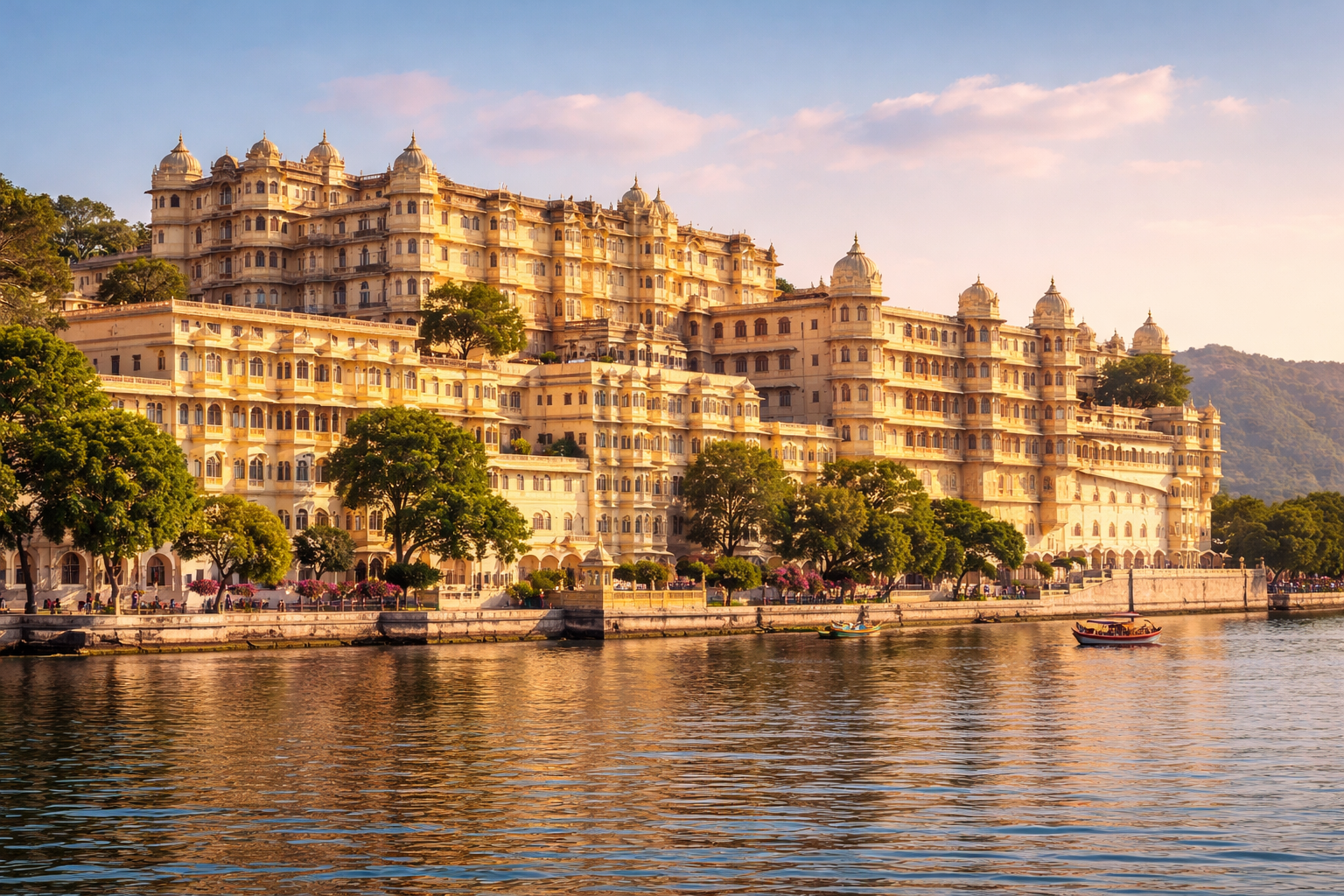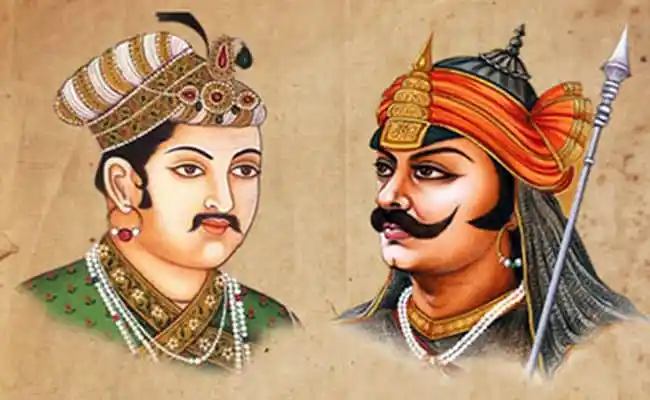
Maharana Pratap – The Legendary Rajput Warrior and Symbol of Courage
Maharana Pratap – The Legendary Rajput Warrior and Symbol of Courage
Maharana Pratap was one of the greatest and most respected warriors in Indian history. He is remembered as a symbol of bravery, sacrifice, patriotism, and self-respect. As the ruler of Mewar, Maharana Pratap dedicated his life to protecting his kingdom and never accepted the dominance of the Mughal Empire, even in the most difficult circumstances.
Even today, Maharana Pratap continues to inspire millions of people across India with his courage, leadership, and unbreakable spirit.
Early Life of Maharana Pratap
Maharana Pratap was born on 9 May 1540 in Kumbhalgarh Fort, Rajasthan. He was the eldest son of Maharana Udai Singh II, the founder of Udaipur, and Maharani Jaiwanta Bai. From a young age, Maharana Pratap was trained in warfare, horse riding, sword fighting, and administration.
He grew up with strong values of independence and honor, which later became the foundation of his resistance against the Mughal rulers.
Maharana Pratap as the King of Mewar
Maharana Pratap ascended the throne of Mewar in 1572. During this time, the Mughal emperor Akbar was expanding his empire and sought to bring Mewar under Mughal control. While many Rajput rulers accepted Akbar’s authority, Maharana Pratap firmly refused to surrender his kingdom.
His decision marked the beginning of a long and heroic struggle for freedom.
Battle of Haldighati (1576)
The most famous event in Maharana Pratap’s life is the Battle of Haldighati, fought in 1576 between the forces of Mewar and the Mughal army led by Man Singh I.
Although the battle did not result in a decisive victory for either side, Maharana Pratap’s courage and determination left a lasting impact on Indian history. His loyal horse Chetak became legendary for saving his life during the battle despite being severely injured.
Life of Struggle and Sacrifice
After the Battle of Haldighati, Maharana Pratap faced extreme hardships. He and his family lived in forests and mountains, surviving on minimal food. Despite these challenges, he never surrendered to the Mughals or compromised his self-respect.
With the support of loyal warriors like Bhil tribals and generals such as Bhamashah, Maharana Pratap continued guerrilla warfare and gradually regained many lost territories of Mewar.
Achievements and Legacy
Maharana Pratap successfully reclaimed several important regions of Mewar, including parts of western Rajasthan. His leadership, resilience, and love for freedom made him a true national hero.
He passed away on 19 January 1597, but his legacy lives on as a symbol of resistance and pride. Monuments, statues, and memorials across India honor his contribution to Indian history.
Famous Quotes of Maharana Pratap
Some popular quotes associated with Maharana Pratap reflect his fearless attitude:
-
“It is better to live one day as a lion than a hundred years as a jackal.”
-
“Self-respect is greater than life itself.”
Maharana Pratap Memorial and Places to Visit
Popular places associated with Maharana Pratap include:
-
Maharana Pratap Memorial, Udaipur
-
Haldighati Battlefield
-
Kumbhalgarh Fort
-
Chavand (his last capital)
These places attract thousands of tourists and history enthusiasts every year.
Frequently Asked Questions (FAQ)
Why is Maharana Pratap famous?
Maharana Pratap is famous for his bravery, resistance against the Mughal Empire, and refusal to surrender his kingdom.
Who was Maharana Pratap’s horse?
Maharana Pratap’s horse was Chetak, known for his loyalty and bravery during the Battle of Haldighati.
Did Maharana Pratap ever surrender to Akbar?
No, Maharana Pratap never accepted Mughal supremacy and remained independent throughout his life.
Conclusion
Maharana Pratap was not just a warrior king but a symbol of courage, honor, and independence. His life teaches us the value of self-respect, sacrifice, and determination. Even centuries later, Maharana Pratap remains a source of inspiration and pride for India.
-
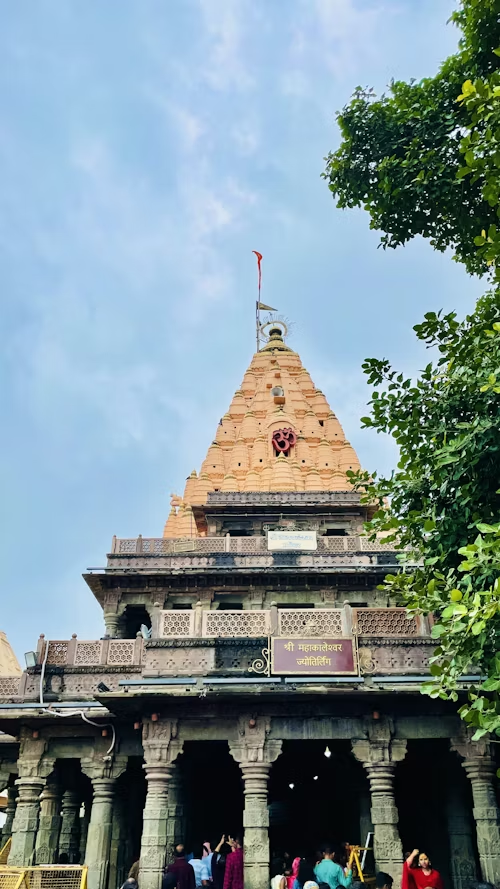
Mahakaleshwar Jyotirlinga, Ujjain: The Eternal Lord of Time and One of the Holiest Shiva Shrines in India
-
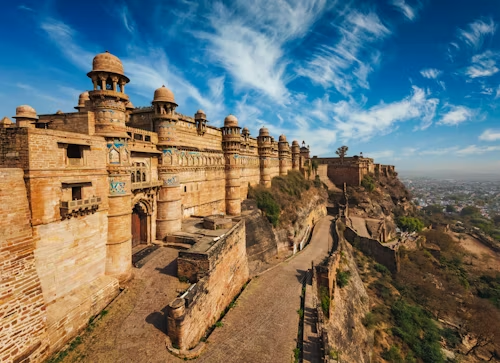
Gwalior Fort: The Majestic Crown of Central India’s History and Heritage
-
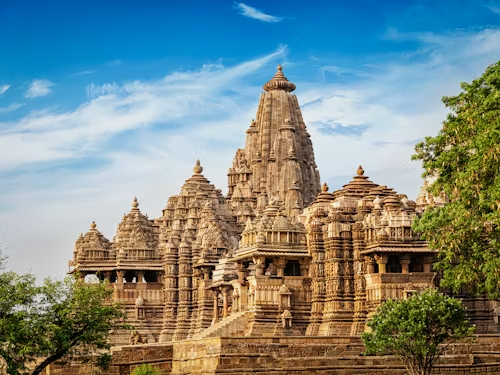
Khajuraho Temples: A Timeless UNESCO World Heritage Site of Art, Spirituality, and Sensuality
-
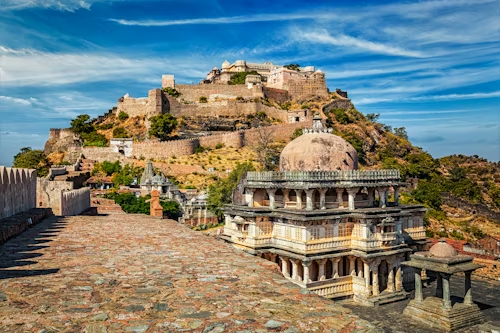
Kumbhalgarh Fort, Rajsamand: The Great Wall of India and the Invincible Pride of Mewar
-
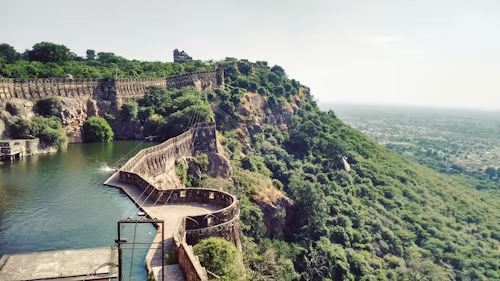
Chittorgarh Fort, Chittorgarh: The Eternal Symbol of Rajput Valor, Sacrifice, and Pride
-
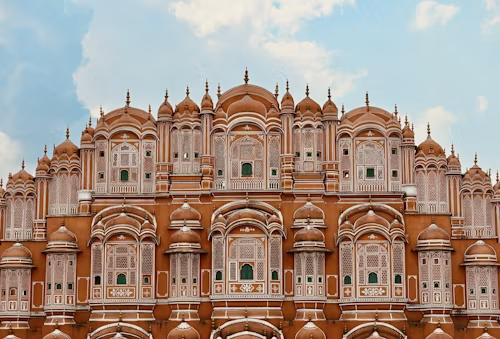
Hawa Mahal, Jaipur: The Iconic Palace of Winds and the Soul of the Pink City
-
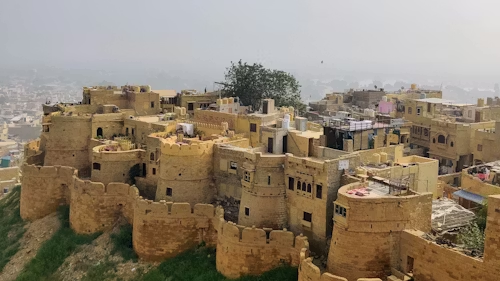
Jaisalmer Fort, Jaisalmer: The Golden Living Fort of the Thar Desert
-
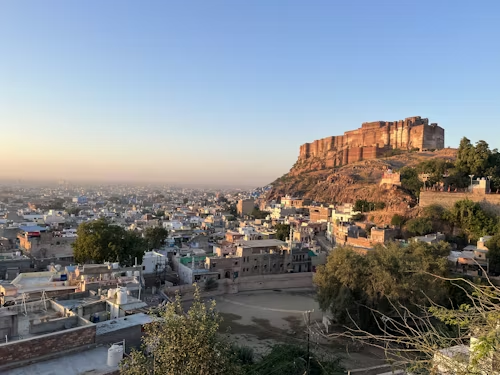
Mehrangarh Fort, Jodhpur: The Majestic Guardian of the Blue City
-
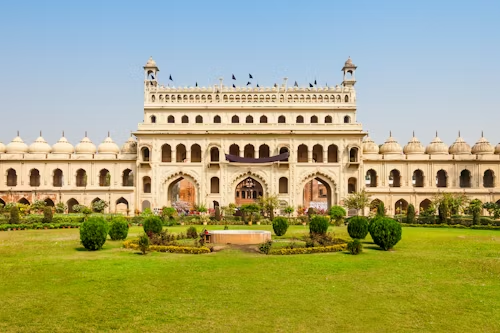
City Palace, Jaipur: The Timeless Heart of Rajasthan’s Royal Legacy
-
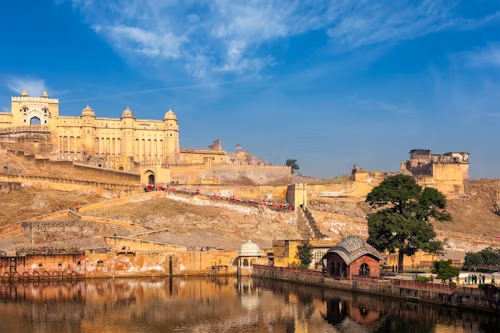
Amer Fort (Amber Palace), Jaipur: A Majestic Symbol of Rajasthan’s Royal Heritage
-
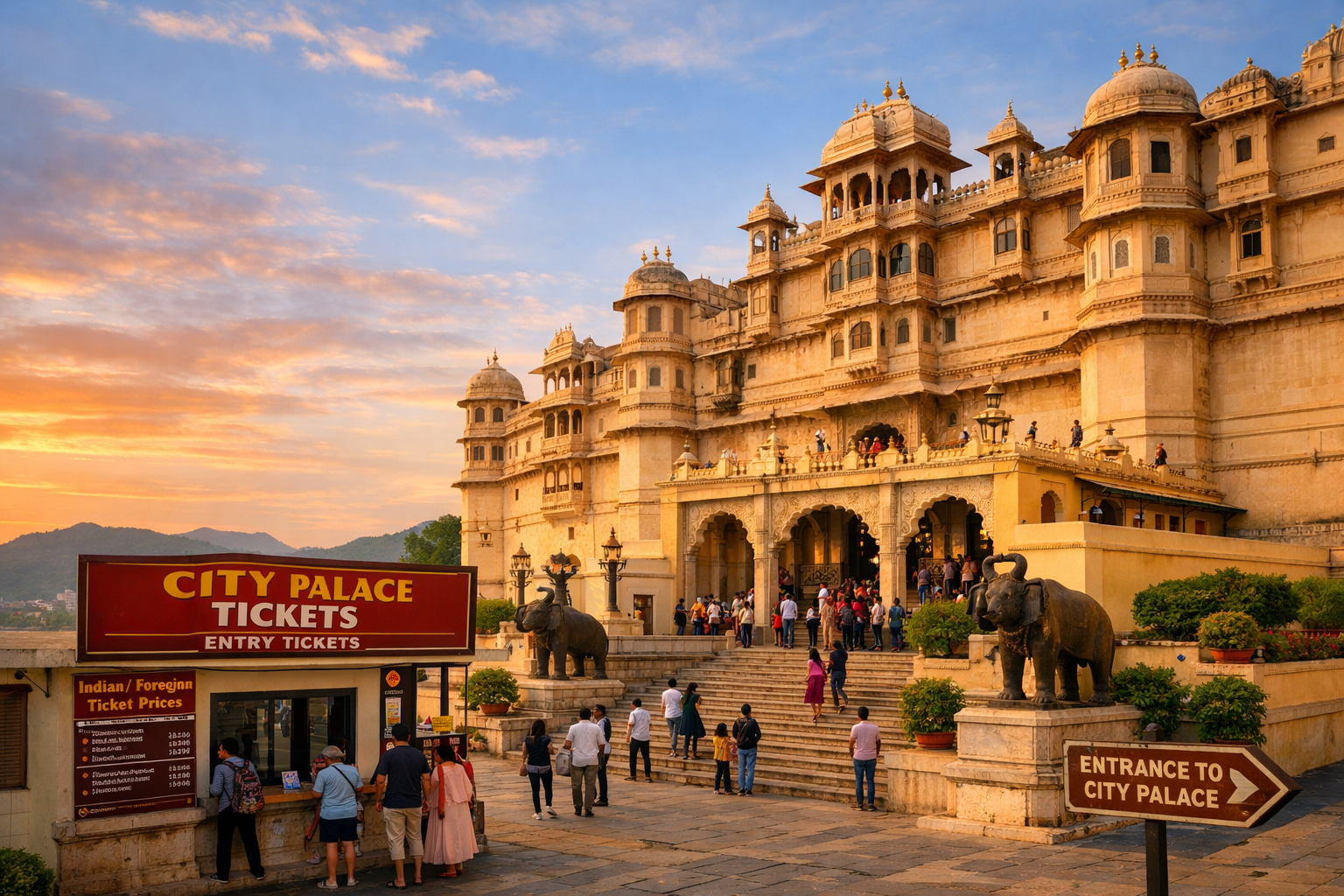
City Palace Udaipur Travel Tips for Families, Couples & Solo Travelers
-
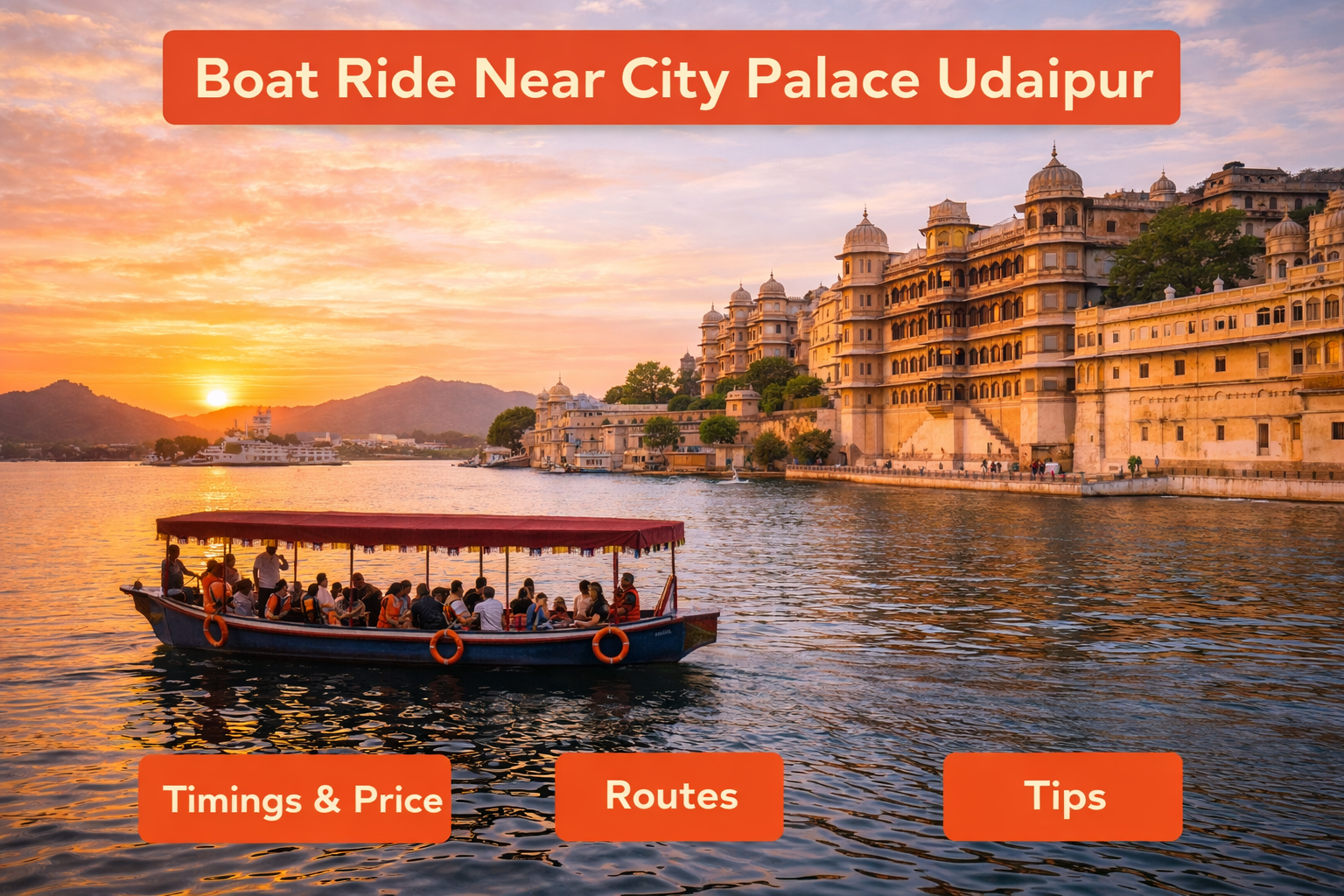
Boat Ride Near City Palace Udaipur: Timings, Price & Tips
-
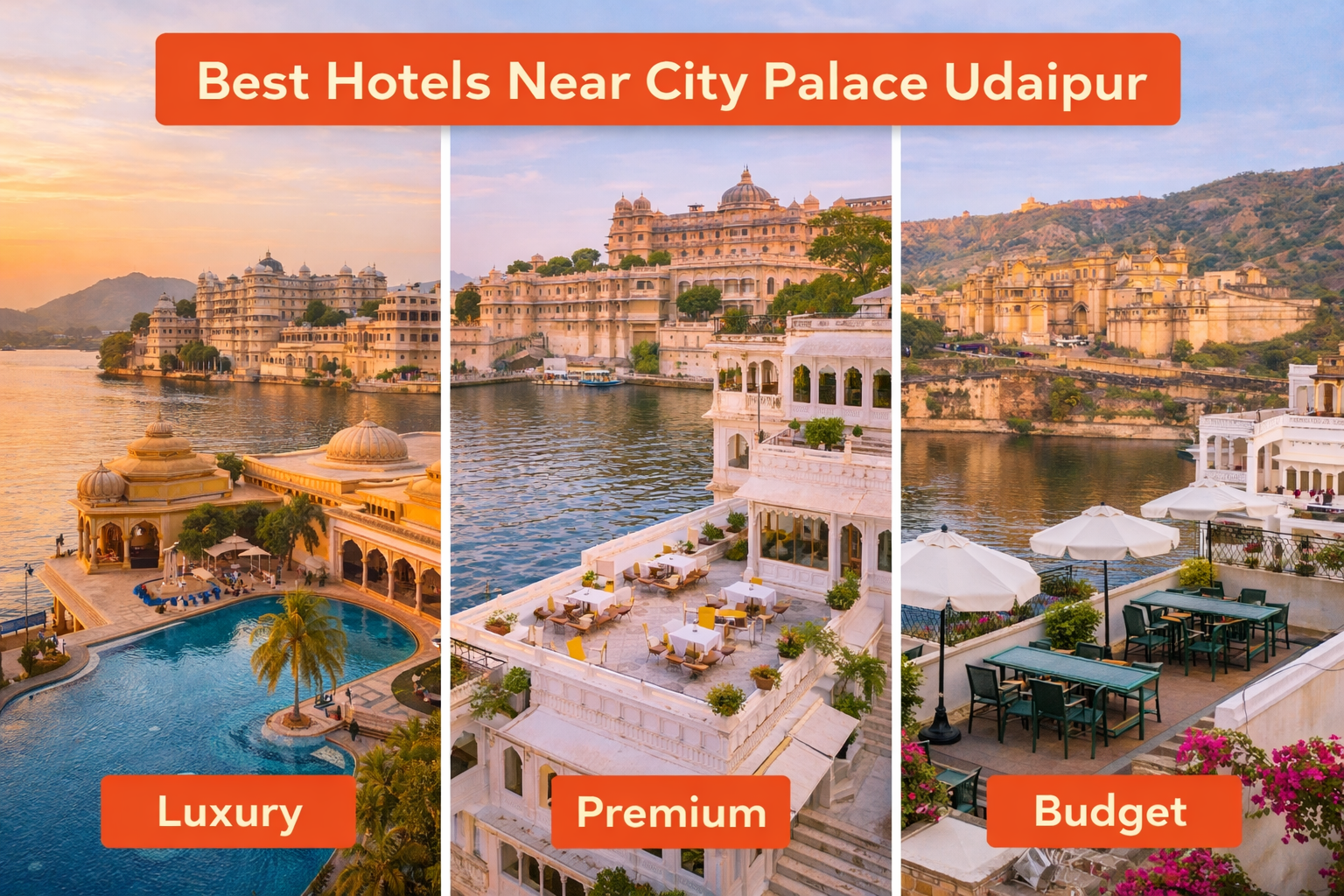
Best Hotels Near City Palace Udaipur for All Budgets (2026 Guide)
-
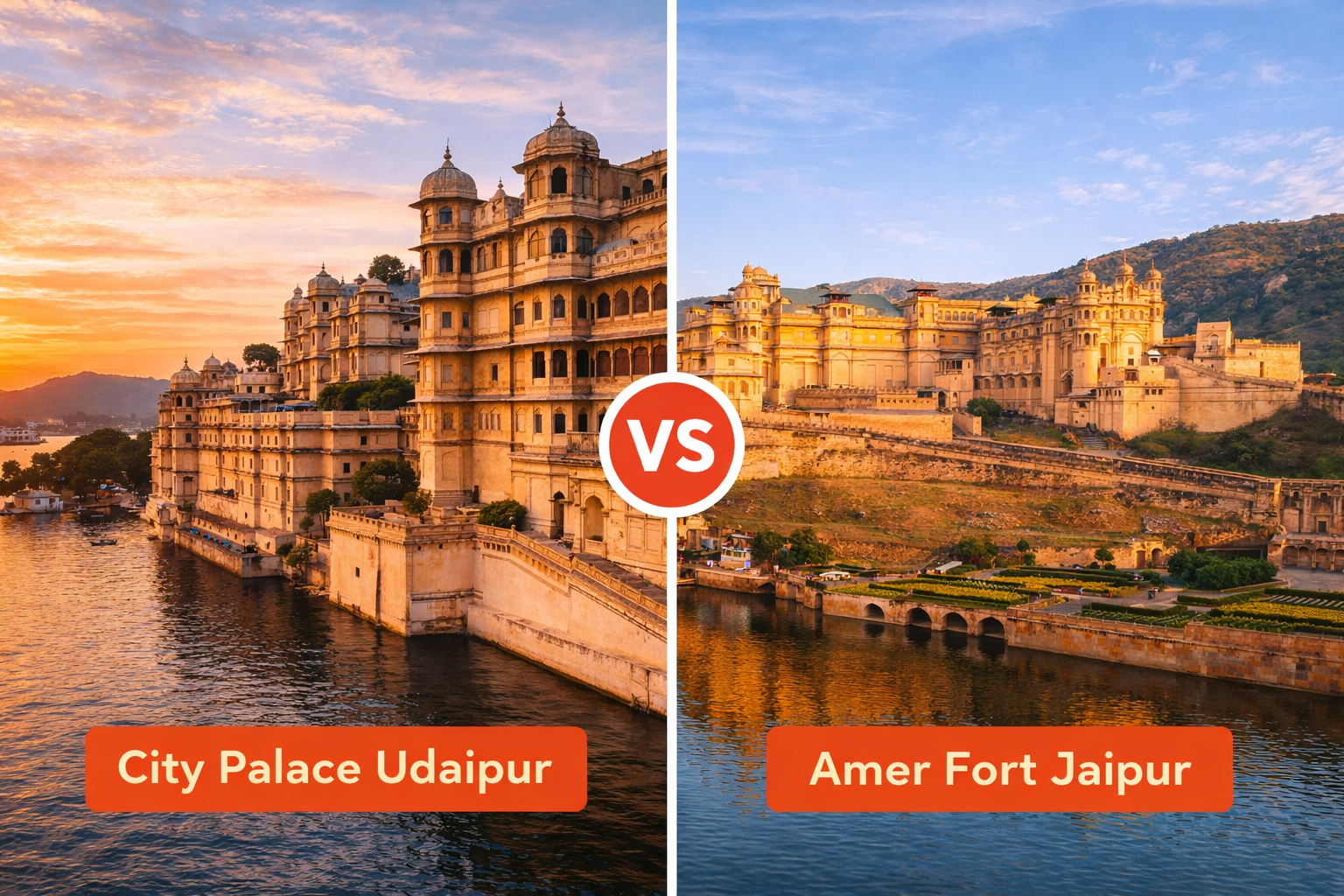
City Palace Udaipur or Amer Fort Jaipur: A Royal Comparison
-
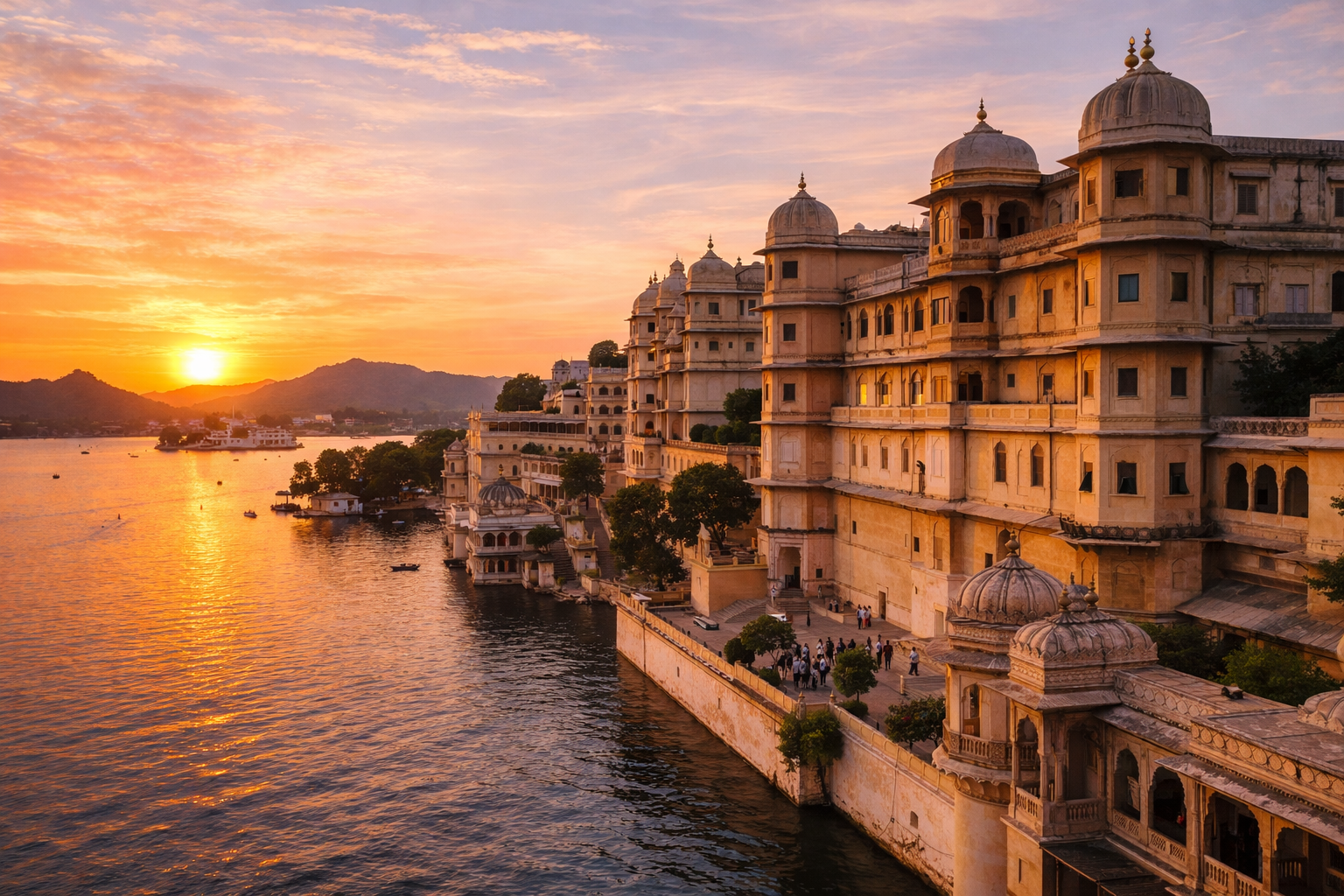
Best Time to Visit City Palace Udaipur for Photography & Sightseeing
-
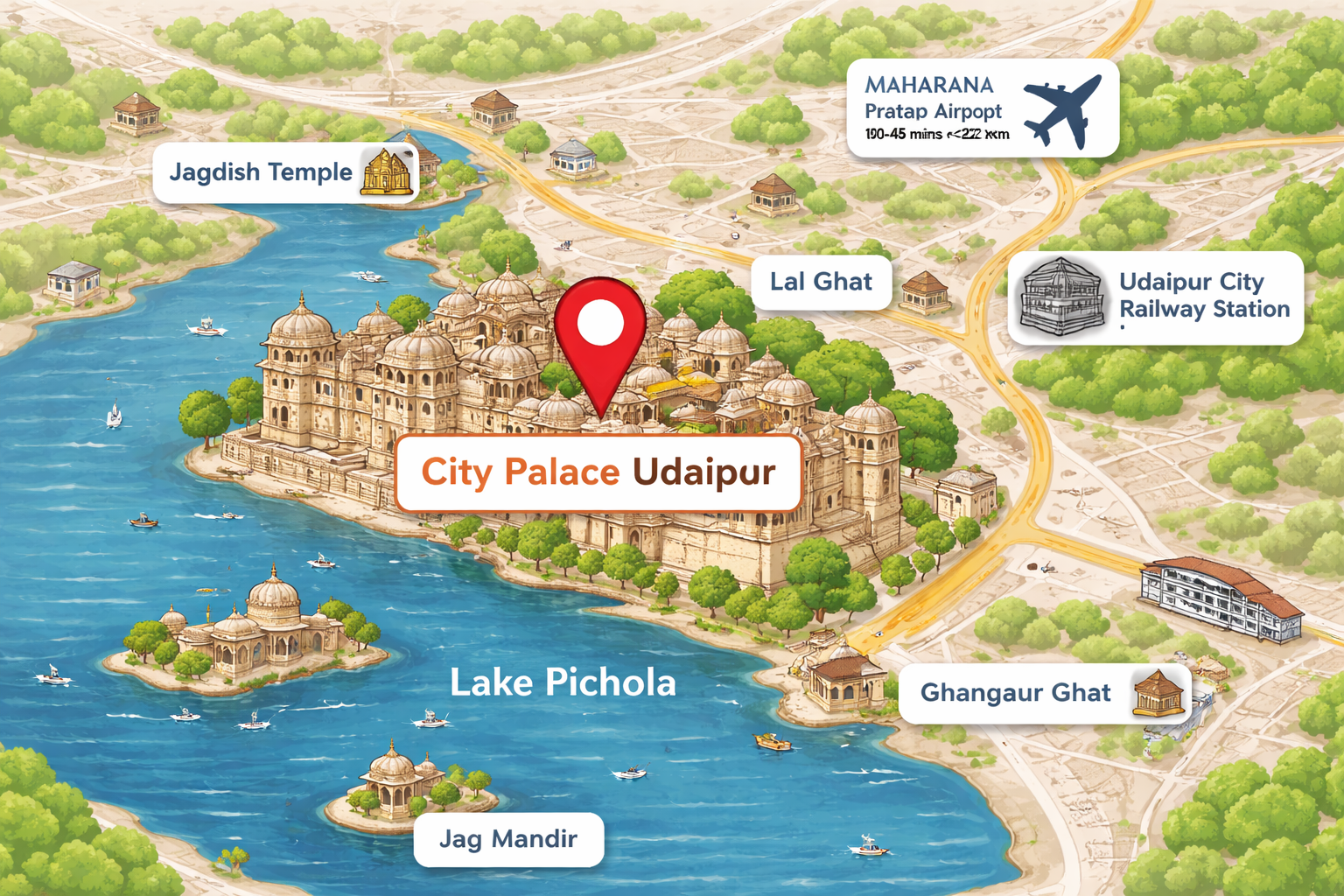
City Palace Udaipur Location, Map & How to Reach Easily
-
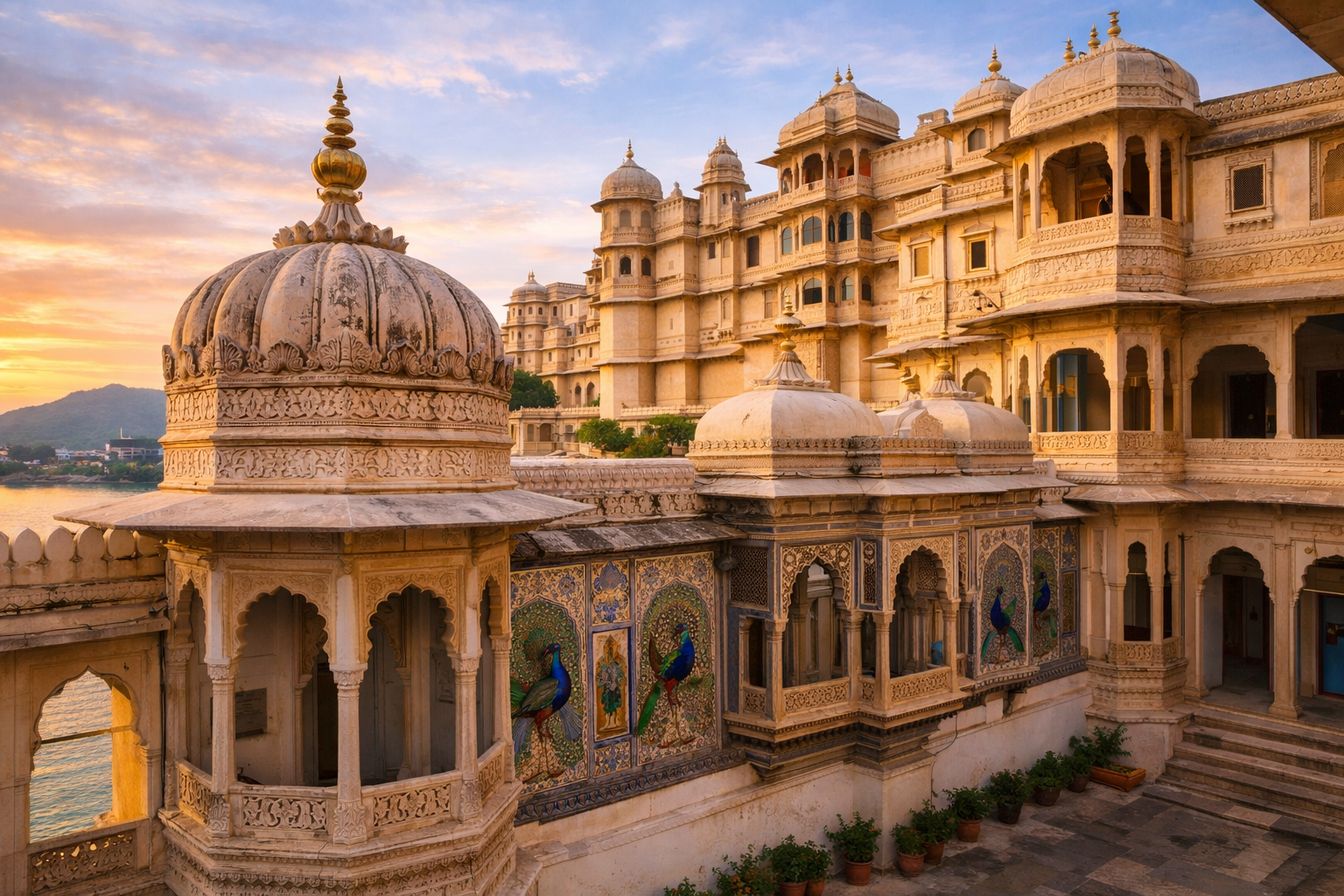
Why Rajasthan Is Called the Land of Royal Palaces: History, Culture, and Tourism Guide
-
How to Plan a 2-Day Udaipur Palace Tour: Perfect Itinerary for First-Time Visitors
-
Top Heritage Palaces in Rajasthan That Reflect Royal Indian Culture
-
Famous Royal Palaces of Udaipur and Their Untold History
-
Complete Travel Guide to Udaipur: Palaces, Lakes, Food, Budget and Travel Tips
-
Best Time to Visit City Palace Udaipur: Weather, Crowd, Festivals and Travel Tips
-
Hidden Facts About City Palace Udaipur That Most Tourists Don’t Know
-
City Palace vs Lake Palace Udaipur: Which One Is Worth Visiting?
-
Top 10 Tourist Palaces in Rajasthan You Must Visit Once in Your Lifetime
-
City Palace Udaipur: Complete History, Architecture, Timings, Ticket Price and Travel Guide