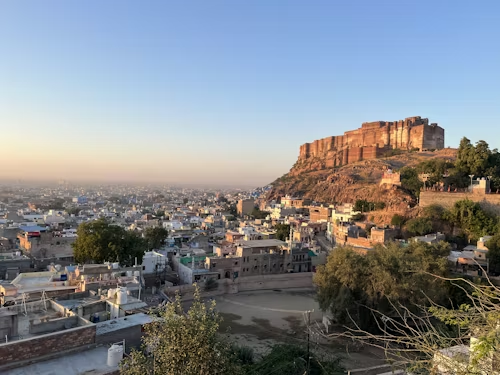
Mehrangarh Fort, Jodhpur: The Majestic Guardian of the Blue City
Towering dramatically over the skyline of Jodhpur, Mehrangarh Fort is one of the largest, most magnificent, and best-preserved forts in India. Rising nearly 400 feet above the Blue City, this colossal fortress dominates the arid landscape of Rajasthan like a timeless sentinel. With its massive walls, intricate palaces, priceless museums, and breathtaking views, Mehrangarh Fort is not just an architectural marvel—it is the very soul of Jodhpur’s history and pride.
Steeped in tales of bravery, sacrifice, royal splendor, and artistic excellence, Mehrangarh Fort offers visitors a powerful journey into Rajasthan’s warrior past and regal lifestyle. Its grandeur, scale, and dramatic setting make it one of the most unforgettable heritage monuments in India.
Historical Background of Mehrangarh Fort
Mehrangarh Fort was founded in 1459 by Rao Jodha, the chief of the Rathore clan and founder of Jodhpur. Seeking a safer and more strategic location for his capital, Rao Jodha chose a rocky hill known as Bhaurcheeria (the hill of birds). From this vantage point, the fort could defend against invasions while controlling the surrounding region.
Legend has it that to ensure the fort’s prosperity, a hermit named Cheeria Nathji was displaced from the hill. To appease him, Rao Jodha built a house for the hermit and buried a man named Raja Ram Meghwal alive in the foundations of the fort as a human sacrifice—an act believed to protect the fort forever. Even today, Meghwal’s descendants are honored by the royal family.
Over the centuries, successive Rathore rulers expanded the fort, adding palaces, courtyards, temples, and defensive structures. Despite numerous battles, Mehrangarh Fort was never fully conquered, standing as a powerful symbol of Rajput valor.
Architectural Grandeur and Defensive Design
Mehrangarh Fort is an outstanding example of Rajput military architecture, blending sheer strength with refined artistry. The fort’s walls rise up to 36 meters high and 21 meters wide, carved directly from the rocky cliff, making the structure appear as if it grows naturally from the hill itself.
The fort complex covers over 5 kilometers, enclosing multiple palaces, courtyards, galleries, and temples. Red sandstone dominates the construction, giving the fort its warm, imposing appearance.
The Imposing Gates of Mehrangarh Fort
The fort is accessed through seven massive gates, each associated with a historical event or victory.
1. Jai Pol
Built by Maharaja Man Singh to commemorate a victory over Jaipur and Bikaner, Jai Pol marks the main entrance to the fort.
2. Fateh Pol
This gate celebrates victory over the Mughals, symbolizing the resilience and independence of the Rathore rulers.
3. Loha Pol
The innermost gate, Loha Pol, is perhaps the most emotionally powerful. The handprints of royal women who committed sati are still visible on its walls—a solemn reminder of historical traditions and sacrifices.
Near this gate, visitors can also see marks left by cannonball attacks, preserved as historical evidence.
Major Palaces Inside Mehrangarh Fort
1. Moti Mahal (Pearl Palace)
The Moti Mahal is the largest and most magnificent palace inside Mehrangarh Fort. It served as the royal court where the maharaja addressed his ministers and nobles.
The palace features:
-
Polished plaster walls that shimmer like pearls
-
Colorful stained-glass windows
-
Five hidden balconies for queens to observe court proceedings unseen
The throne of Jodhpur was once placed here, making it a symbol of royal authority.
2. Phool Mahal (Flower Palace)
As the name suggests, Phool Mahal is the most luxurious and ornate palace in the fort. Built by Maharaja Abhaya Singh, it was designed as a private pleasure hall.
The palace is adorned with:
-
Gold filigree work
-
Rich paintings
-
Lavish ceilings
Phool Mahal reflects the wealth, artistic taste, and celebratory lifestyle of Jodhpur’s rulers.
3. Sheesh Mahal (Mirror Palace)
The Sheesh Mahal is a small but dazzling chamber decorated with mirrors, colored glass, and intricate carvings. It was used by the royal family for private worship and meditation.
The reflective surfaces create a magical ambiance, especially when illuminated.
4. Takhat Vilas
Built by Maharaja Takhat Singh, Takhat Vilas served as his personal residence. It showcases:
-
Brightly painted walls
-
Glasswork
-
European-style elements
This palace represents the transitional phase of Indian architecture during the colonial era.
Mehrangarh Fort Museum: A Treasure House of History
Mehrangarh Fort houses one of the finest museums in India, showcasing the rich heritage of the Rathore dynasty.
Museum Highlights Include:
-
Royal palanquins (howdahs)
-
Arms and armor including swords, daggers, and firearms
-
Costumes, textiles, and turbans
-
Paintings and manuscripts
-
Musical instruments
Each gallery is well curated, offering deep insights into royal life, warfare, diplomacy, and culture.
Chamunda Mataji Temple
Located at the southern end of the fort, the Chamunda Mataji Temple is dedicated to the goddess Chamunda, the royal deity of the Rathores. Rao Jodha brought the idol from Mandore when he established Jodhpur.
Even today, the temple attracts devotees, especially during Navratri, and adds a spiritual dimension to the fort.
Panoramic Views of the Blue City
One of the most unforgettable experiences at Mehrangarh Fort is the view from its ramparts. From here, visitors can admire the sea of blue-painted houses that give Jodhpur its nickname, “The Blue City.”
The blue color was traditionally associated with Brahmins but later adopted widely for its cooling properties and aesthetic charm.
At sunset, the fort offers spectacular views as golden light bathes the city and desert landscape.
Cultural Significance and Legends
Mehrangarh Fort is deeply woven into the cultural fabric of Rajasthan. It has been a setting for:
-
Royal coronations
-
Festivals and ceremonies
-
Historic battles
The fort also hosts cultural events, concerts, and exhibitions, blending heritage with modern artistic expression.
Mehrangarh Fort in Popular Culture
Mehrangarh Fort has featured in several international and Indian films, including:
-
The Dark Knight Rises
-
Hum Saath-Saath Hain
-
Holiday
Its dramatic setting and scale make it a favorite filming location.
Best Time to Visit Mehrangarh Fort
-
October to March is the ideal season due to pleasant weather
-
Early mornings and late afternoons are best for photography
-
Summers (April–June) can be extremely hot
Visitor Tips
-
Wear comfortable footwear; the fort involves steep climbs
-
Allocate 3–4 hours for a full visit
-
Audio guides are highly recommended
-
Carry water, especially in warmer months
-
Respect museum rules and restricted areas
Mehrangarh Fort and Jodhpur Tourism
Mehrangarh Fort is the crown jewel of Jodhpur tourism and is close to:
-
Jaswant Thada
-
Clock Tower and Sardar Market
-
Umaid Bhawan Palace
Together, these attractions offer a complete cultural experience of the Blue City.
Conclusion
Mehrangarh Fort is more than a historical monument—it is a living legacy of courage, artistry, and royal pride. Its towering walls, exquisite palaces, priceless collections, and commanding views make it one of the greatest forts in India.
A visit to Mehrangarh Fort is a journey through time, where every stone tells a story of valor, honor, and splendor. For anyone visiting Rajasthan, Mehrangarh Fort is not just a destination—it is an unforgettable experience.