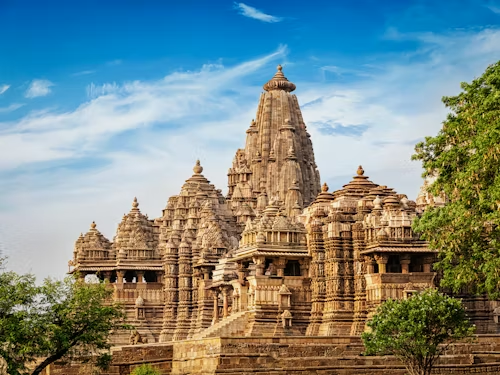
Khajuraho Temples: A Timeless UNESCO World Heritage Site of Art, Spirituality, and Sensuality
Khajuraho, located in the heart of Madhya Pradesh, is one of India’s most extraordinary heritage destinations. Famous worldwide for its exquisitely carved temples, Khajuraho represents the perfect harmony between spiritual devotion, artistic excellence, and human expression. Declared a UNESCO World Heritage Site, the Khajuraho Group of Monuments is admired not only for its architectural brilliance but also for its bold and sophisticated portrayal of life in all its forms.
Often misunderstood as merely “erotic temples,” Khajuraho is, in reality, a profound cultural and spiritual statement carved in stone. The temples celebrate dharma (duty), artha (prosperity), kama (desire), and moksha (liberation)—the four essential goals of human life according to Indian philosophy.
Today, Khajuraho stands as a symbol of India’s artistic freedom, philosophical depth, and architectural mastery, attracting historians, architects, spiritual seekers, photographers, and travelers from across the globe.
Historical Background of Khajuraho
Khajuraho was built between 950 AD and 1050 AD by the Chandela dynasty, a powerful Rajput clan that ruled central India during the medieval period. At its peak, Khajuraho is believed to have had around 85 temples, of which about 25 temples have survived the ravages of time.
The Chandela rulers were patrons of art, culture, and religion. Under their reign, Khajuraho flourished as a prominent religious and cultural center, accommodating Hinduism, Jainism, and Tantric traditions.
After the decline of the Chandelas, Khajuraho gradually faded into obscurity and was reclaimed by dense forests. The temples remained hidden for centuries until they were rediscovered in 1838 by British surveyor T.S. Burt.
Remarkably, despite centuries of neglect, the temples survived largely intact—thanks to their remote location and robust construction.
Why Khajuraho Is a UNESCO World Heritage Site
Khajuraho was designated a UNESCO World Heritage Site in 1986 for its:
-
Outstanding universal value
-
Exceptional temple architecture
-
Intricate stone carvings
-
Representation of medieval Indian culture and philosophy
The temples are considered among the finest examples of Nagara-style temple architecture in India.
Architectural Excellence of Khajuraho Temples
The Khajuraho temples are built primarily from sandstone, assembled without mortar using precise joints. Their architectural style reflects perfection in symmetry, proportion, and sculptural detail.
Key Architectural Features
-
Elevated stone platforms (jagati)
-
Tall curvilinear towers (shikharas)
-
Elaborately carved exterior walls
-
East-facing temple orientation
-
Balanced geometric layouts
The temples were designed to symbolize Mount Meru, the cosmic mountain in Hindu mythology.
The Famous Khajuraho Sculptures
What sets Khajuraho apart from any other temple complex in the world is its extraordinary sculptural program.
Themes Depicted in Sculptures
-
Gods and goddesses
-
Celestial beings (apsaras and gandharvas)
-
Royal processions
-
Musicians and dancers
-
Daily village life
-
Erotic and tantric imagery
Interestingly, only about 10% of the carvings depict erotic scenes. The majority celebrate everyday life, devotion, and mythology.
The erotic sculptures are symbolic, representing:
-
Creation and fertility
-
Union of soul and divine
-
Celebration of life energy
They are placed on the outer walls, symbolizing that desire must be transcended before entering the spiritual core of the temple.
Classification of Khajuraho Temples
The surviving temples are divided into three main groups based on their geographical location.
1. Western Group of Temples (Most Famous)
The Western Group is the most well-preserved and visited section of Khajuraho.
Kandariya Mahadeva Temple
-
Largest and most magnificent temple
-
Dedicated to Lord Shiva
-
Features over 800 sculptures
-
Tower rises about 31 meters high
This temple is considered the pinnacle of Chandela architecture.
Lakshmana Temple
-
Dedicated to Lord Vishnu
-
One of the oldest temples in Khajuraho
-
Known for its detailed carvings and inscriptions
Vishwanath Temple
-
Dedicated to Lord Shiva
-
Features a massive Nandi bull sculpture
Devi Jagdambi Temple
-
Known for refined sculptural details
-
Believed to have originally been a Vishnu temple
2. Eastern Group of Temples (Jain Temples)
The Eastern Group highlights the religious tolerance of the Chandela rulers.
Parshvanatha Temple
-
Largest Jain temple in Khajuraho
-
Features carvings similar to Hindu temples
Adinath Temple
-
Dedicated to the first Jain Tirthankara
Despite being Jain temples, their architecture and sculptures are stylistically consistent with Hindu temples.
3. Southern Group of Temples
Less crowded and more serene, this group includes:
Duladeo Temple
-
Dedicated to Lord Shiva
-
Known for graceful erotic sculptures
Chaturbhuj Temple
-
Houses a massive Vishnu idol
-
Unique for lacking erotic carvings
Spiritual and Philosophical Significance
Khajuraho temples embody Tantric philosophy, where spiritual enlightenment is achieved by embracing life rather than renouncing it.
The temples convey that:
-
Desire is part of human existence
-
Spiritual growth comes through balance
-
Art and devotion are interconnected
This progressive outlook was revolutionary for its time and remains relevant even today.
Khajuraho Dance Festival
One of the highlights of Khajuraho tourism is the Khajuraho Dance Festival, held annually in February.
Festival Highlights
-
Classical dance forms like Bharatanatyam, Kathak, Odissi
-
Performances set against illuminated temples
-
Artists from across India
The festival revives the ancient connection between temples, dance, and devotion.
Best Time to Visit Khajuraho
-
October to March – Best weather for sightseeing
-
February – Ideal for attending the Dance Festival
-
Summers (April–June) are very hot
-
Monsoon (July–September) brings greenery but humidity
How to Reach Khajuraho
By Air
-
Khajuraho Airport has direct flights from Delhi and Varanasi
By Train
-
Khajuraho Railway Station connects to major cities
By Road
-
Well-connected by road to Jhansi, Orchha, and Satna
Visitor Tips for Khajuraho
-
Allocate 1–2 full days for exploration
-
Hire a licensed guide for deeper understanding
-
Visit temples early morning or late afternoon
-
Respect religious sentiments
-
Photography is allowed (no drones)
Khajuraho Beyond Temples
Nearby attractions include:
-
Raneh Falls – Canyon with volcanic rock formations
-
Panna National Park – Tiger reserve and wildlife
-
Ken River – Scenic river views and boat rides
Conservation and Preservation
The Archaeological Survey of India (ASI) actively preserves the temples through:
-
Structural restoration
-
Controlled tourism
-
Landscape maintenance
Responsible tourism is crucial to protect this fragile heritage.
Why Khajuraho Is More Than Erotic Art
Khajuraho is:
-
A celebration of life
-
A spiritual philosophy in stone
-
A historical record of medieval India
-
A global symbol of artistic freedom
The temples teach that spirituality does not deny life—it elevates it.
Conclusion
Khajuraho is one of India’s greatest cultural treasures—a place where art, spirituality, and human emotion coexist in perfect harmony. Its temples stand not as monuments of controversy, but as timeless expressions of wisdom, creativity, and inclusiveness.
To walk through Khajuraho is to witness a civilization unafraid of truth, beauty, and balance. It remains a must-visit destination for anyone seeking to understand the depth and diversity of Indian heritage.