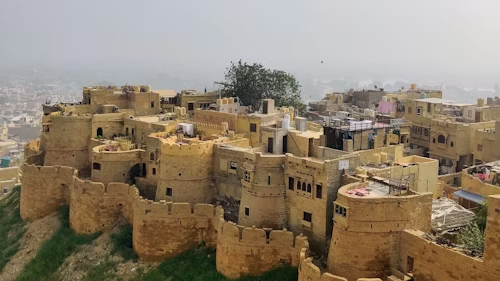
Jaisalmer Fort, Jaisalmer: The Golden Living Fort of the Thar Desert
Rising like a golden mirage from the heart of the Thar Desert, Jaisalmer Fort is one of the most extraordinary forts in the world. Also known as Sonar Quila or the Golden Fort, this majestic structure glows in shades of honey and amber under the desert sun, earning it a reputation as one of India’s most visually stunning monuments.
Unlike most forts that stand silent as relics of the past, Jaisalmer Fort is a living fort—a bustling settlement where thousands of people still reside within its ancient walls. Narrow lanes, temples, houses, shops, cafés, and havelis coexist with palaces and ramparts that date back over eight centuries. This rare blend of living culture and historical grandeur makes Jaisalmer Fort not just a monument, but a living heritage of Rajasthan.
Declared a UNESCO World Heritage Site under the group of “Hill Forts of Rajasthan,” Jaisalmer Fort stands as a symbol of Rajput valor, desert ingenuity, and architectural brilliance.
Historical Background of Jaisalmer Fort
Jaisalmer Fort was founded in 1156 AD by Rawal Jaisal, a Bhati Rajput ruler and the founder of the city of Jaisalmer. According to legend, Rawal Jaisal was guided by a prophecy from a sage who advised him to establish his capital on Trikuta Hill, a strategic location surrounded by desert terrain.
At the time, Jaisalmer lay along important ancient trade routes connecting India with Central Asia, the Middle East, and beyond. Camel caravans carrying silk, spices, precious stones, and textiles passed through the region, bringing immense wealth to the kingdom. Jaisalmer Fort functioned as both a defensive stronghold and a thriving commercial hub.
Over centuries, the fort witnessed numerous battles, alliances, and sieges—particularly conflicts with rival Rajput clans and invasions during the medieval period. Despite hardships, Jaisalmer Fort endured, emerging as one of the best-preserved forts in India.
Why Jaisalmer Fort Is Called the “Golden Fort”
The fort is constructed from yellow sandstone, which gives it a golden hue that changes with the light of the day. At sunrise, the fort appears pale gold; by noon, it glows bright yellow; and at sunset, it transforms into a rich amber or honey color.
This magical color shift makes Jaisalmer Fort appear almost unreal, especially when viewed from a distance against the endless desert backdrop. At night, softly illuminated, the fort looks like a golden crown resting on Trikuta Hill.
Architectural Brilliance of Jaisalmer Fort
Jaisalmer Fort is a masterpiece of Rajput military architecture, designed to withstand harsh desert conditions and enemy attacks. The fort rises approximately 250 feet above the surrounding plain and is encircled by massive walls extending nearly 1,500 feet in length.
Key Architectural Features:
-
Thick sandstone walls with rounded bastions
-
Narrow, winding pathways to confuse invaders
-
Multiple defensive gates
-
Water conservation systems adapted for desert life
The fort’s design reflects both strength and aesthetic elegance—an essential balance for Rajput rulers.
The Mighty Gates of Jaisalmer Fort
The fort is accessed through four massive gateways, each strategically positioned and designed for defense:
-
Akhai Pol
-
Suraj Pol (Sun Gate)
-
Ganesh Pol
-
Hawa Pol (Wind Gate)
These gates are aligned in a zigzag pattern to slow advancing enemies and protect the fort from direct attacks by war elephants and artillery.
Palaces Inside Jaisalmer Fort
1. Raj Mahal (Royal Palace)
The Raj Mahal served as the residence of the Bhati Rajput rulers. Built over several centuries, it reflects a blend of early and later Rajput architectural styles.
Inside, visitors can explore:
-
Carved balconies (jharokhas)
-
Ornate windows
-
Royal chambers and courtyards
The palace offers panoramic views of Jaisalmer city and the vast desert beyond.
2. Jain Temples of Jaisalmer Fort
One of the most remarkable features of Jaisalmer Fort is its cluster of exquisitely carved Jain temples, dating from the 12th to 15th centuries.
Dedicated to Jain Tirthankaras such as Rishabhanatha, Sambhavanatha, and Parshvanatha, these temples are renowned for:
-
Intricate stone carvings
-
Delicate lattice work
-
Detailed sculptures and ceilings
The craftsmanship rivals that of Dilwara Temples in Mount Abu and showcases the prosperity and artistic devotion of Jain merchants who once dominated trade in the region.
3. Laxminath Temple
The Laxminath Temple, dedicated to Lord Vishnu and Goddess Lakshmi, is one of the oldest Hindu temples inside the fort. It continues to function as a place of worship, highlighting the fort’s living religious traditions.
Life Inside a Living Fort
Approximately 3,000–4,000 people still live within Jaisalmer Fort, making it one of the very few inhabited forts in the world. Homes, guesthouses, shops, cafés, and temples fill the narrow lanes, creating a vibrant atmosphere.
Visitors can experience:
-
Traditional Rajasthani homes
-
Local handicraft shops
-
Rooftop cafés with fort and desert views
-
Daily life unfolding within ancient walls
This living aspect makes Jaisalmer Fort unique—but also presents challenges for conservation.
Water Management and Desert Engineering
Living in the harsh Thar Desert required advanced water management systems. Jaisalmer Fort was equipped with:
-
Rainwater harvesting tanks
-
Underground reservoirs
-
Channels directing water into storage areas
These systems allowed the fort to survive long sieges and droughts, demonstrating remarkable medieval engineering.
Cultural and Historical Significance
Jaisalmer Fort represents:
-
Rajput bravery and independence
-
Desert adaptability and sustainability
-
Trade and cultural exchange
The fort has been a center of art, religion, commerce, and governance for centuries. Festivals like Desert Festival, Diwali, and Jain religious celebrations add to its cultural vibrancy.
Jaisalmer Fort in Popular Culture
The fort gained international fame through:
-
Satyajit Ray’s film “Sonar Kella (The Golden Fortress)”
-
Various documentaries and travel shows
Its cinematic beauty continues to inspire artists and filmmakers worldwide.
Best Time to Visit Jaisalmer Fort
-
October to March is the best season, with pleasant weather
-
Early mornings and sunsets offer the best views and photography
-
Summers (April–June) can be extremely hot
Visitor Tips
-
Wear comfortable walking shoes
-
Stay hydrated, especially in warmer months
-
Respect religious sites and local residents
-
Avoid plastic to help preserve the fort
-
Hire a local guide for deeper historical insight
Conservation Challenges
Due to modern plumbing, tourism pressure, and aging infrastructure, Jaisalmer Fort faces structural challenges. Conservation efforts are ongoing to protect this fragile living heritage while maintaining the livelihoods of its residents.
Responsible tourism plays a crucial role in preserving the fort for future generations.
Conclusion
Jaisalmer Fort is not merely a monument—it is a golden city frozen in time yet alive with daily rhythms. From its majestic walls and ornate temples to its vibrant streets and glowing sandstone, the fort offers an unforgettable journey into Rajasthan’s desert heritage.
Standing atop its ramparts as the sun sets over the Thar Desert, one truly understands why Jaisalmer Fort is considered one of the greatest wonders of India. It is a place where history breathes, culture thrives, and the golden sands whisper stories of centuries gone by.